NOTE: there may be spoilers of The Green Mile, Pocahontas and Avatar if you have not already seen these films. Also Ruth/Rachel this is the post I would like graded for week 4.
(please click the cartoon to view the full image)
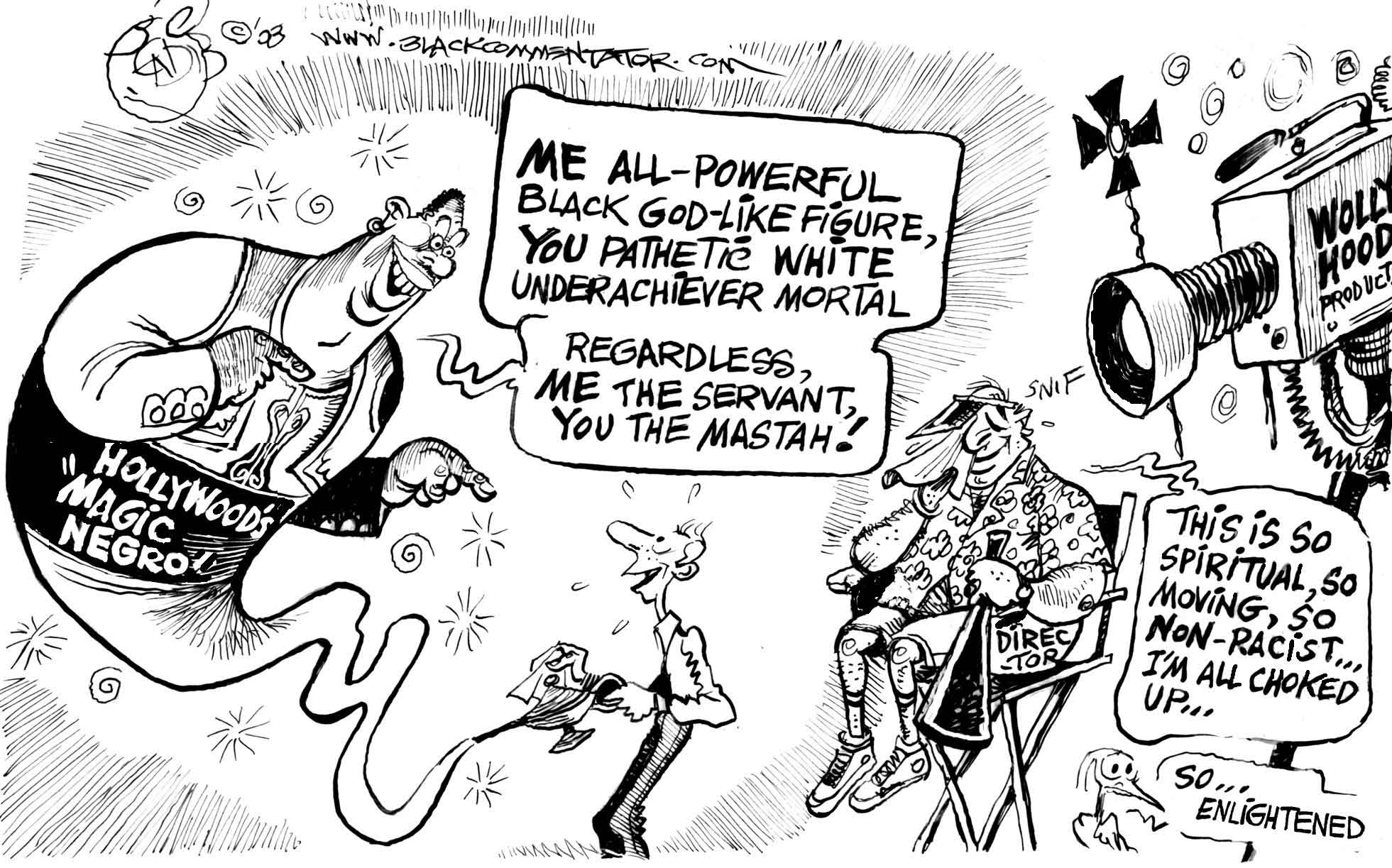
This week I want to focus on one popular stereotype of people of color that is seen in film, "The Mystic". This can be seen in the forms of the 'Noble Savage' (in Native Americans and Indigenous peoples) and as the 'Magic Negro' (in Blacks). Some other common characters I mention include the 'White Messiah' who come to save the day for people of color and the classic white protagonist with a friend who is a person of color.
The noble savage is seen in almost all depictions of Native Americans in film. Pocahontas and Avatar are two films that show both the 'Noble Savage' and the 'White Messiah' and in fact have these two characters in a romantic relationship together. Interesting to note that in both cases the savage is both a woman and indigenous and the messiah is a white male. Placing the messiah in the position of power and the savage overpowered both by race and gender.
In Pocahontas, the relationship
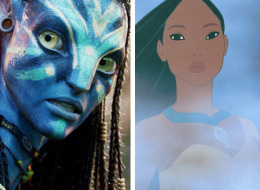
exists between John Smith (White Messiah) and Pocahontas (Noble Savage). Pocahontas is very in tune with nature, she talks to animals and considers them part of her family. As well, she speaks with a spirit tree which shares the heritage of her people and sees the future. She does make the point that she does not want to be labeled as a savage in the song "Colors Of The Wind" (Thomas, 1995):
"You think I'm an ignorant savage and you've been so many places, I guess it must be so, but still I cannot see. If the savage one is me, how can there be so much that you don't know?"However, she goes on to prove that she is not a savage by expressing her unity with nature. John Smith learns some of Pocahontas's culture of embracing nature but tells her of the right (European) way of life, the importance of gold and tells her how to be civilized. In the end John Smith (with a little help from Pocahontas) stands between the battle of the colonizers and Pocahontas's tribe and to save the day.
In Avatar Jake Sully plays the "White Messiah" and Neytiri plays the "Noble Savage". Their story follows along almost all of the same lines as Pocahontas, Jake Sully is sent to make diplomatic compromise to obtain a natural resource from Neytiri's people, the Na'vi. Neytiri is very connected with nature and like Pochahontas speaks with and prays to a magical tree that is the lifeblood of her culture. Throughout the disputes with humans, saving grace Jake Sully leads the Na'vi people in battle and his tactics and techniques once again save the day. Both of these examples show the message that though noble, indigenous people are unable to stand up for themselves and they will always be uncivilized.
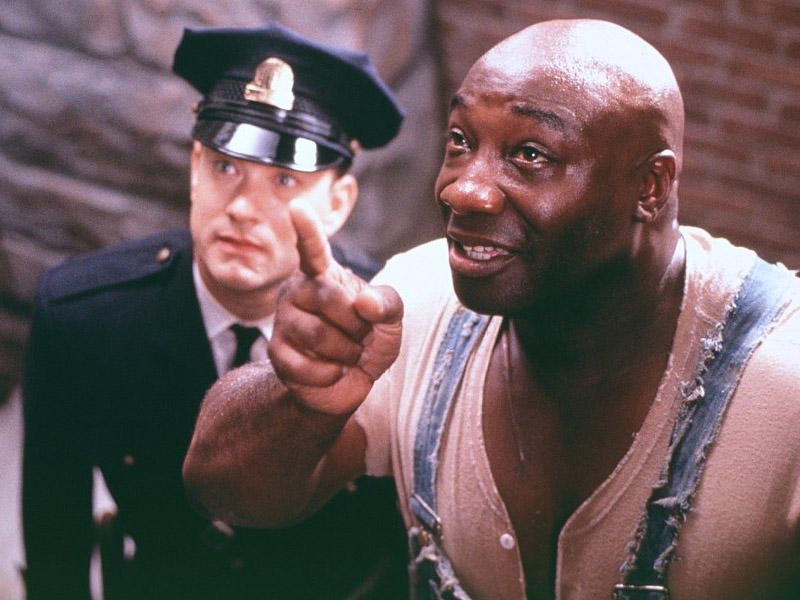
Another interesting relationship developed between the mystic of color and the white protagonist are friendships between the 'Magic Negro' and the white protagonist. One clear example of this is in The Green Mile. In this film the 'Magic Negro' is John Coffey (Michael Clarke Duncan) and the white protagonist is Paul Edgecomb (Tom Hanks). John Coffey is the bearer of a great healing power, but it does little to change his own situation. He is a poor, uneducated man who is accused of the rape and murder of two small white girls and spends the majority of the film behind bars. Coffey and Edgecomb develop a sort of friendship as Coffey begins to show his truly docile nature and displays his magical powers. Despite his great power Coffey continues to humble himself and calls Edgecomb "Boss."
Coffey's greatest achievements in this film in his magical healing of white people. Coffey takes away Paul Edgecomb's urinary tract infection and heals the warden's wife of her grave illness and tumors. When Coffey heals these illnesses they become a sickness inside of him before he coughs it up. Even the way that Coffey uses his magic symbolizes taking the burden off of white people and places it on himself. In the end of the film despite all of John Coffey's spiritual power and despite proving his innocence by transmitting the memory of the true attack to be seen in Edgecomb's mind he is still killed. The 'Magic Negro', regardless of strength, wisdom, or power, is bound to the chains of white man's wants and ways.
The mystic stereotype of people of color oversimplifies them. Just as white characters are complex and developed more like real people, characters of color should be as well. There is more than one dimension to any person, regardless of race. Additionally, when fewer roles exist for people of color and one-dimensional stereotypical roles are the majority of what is offered the perpetuating message is that people of color are rarely seen and one dimensional, if not just invisible.
I enjoy all of the films that I have discussed in this entry and believe each have strong narratives and entertainment value. Additionally, all of these films have had some progressive steps in terms of discrimination. Sully, the hero in Avatar is differently- abled. Pocahontas features Native voices for all of its Native characters and shows the second Disney princess of color. Michael Clarke Duncan received an Oscar nomination for his supporting role in The Green Mile. Despite these progressions I wanted to bring up the underlying themes of oppression which exist in these films, as to better understand and be aware of the stories that they truly telling. A movie can be compelling, entertaining, and moving while still spinning the wheel of oppression. And many still are.
Images from:


